The 148-Degree Reality Check: Why Your Twin Cities Lawn is Cooked (Literally)
7065376901 • May 27, 2026

May 27, 2026

Why Mowing Your Grass Short is Accidentally Cooking Your Root System, and the Two Steps to Stop It Today

How a 42-Degree Difference Explains Why Short Grass Fries While Thick Lawns Survive the Minnesota Heat Wave

Right now, Twin Cities homeowners are watching their yards take a massive beating. The air temperature is hovering around 91°F, and lawns across the entire metro area are struggling.

But if you think your grass is only dealing with 91-degree heat, you are missing the real threat. The real battle isn't happening in the air—it’s happening right at the ground level. Whether you are dealing with the heavy clay soils in Woodbury and Plymouth, or fighting the fast-draining sandy dirt in Blaine and Andover, the intense heat hitting your property right now is exactly the same.

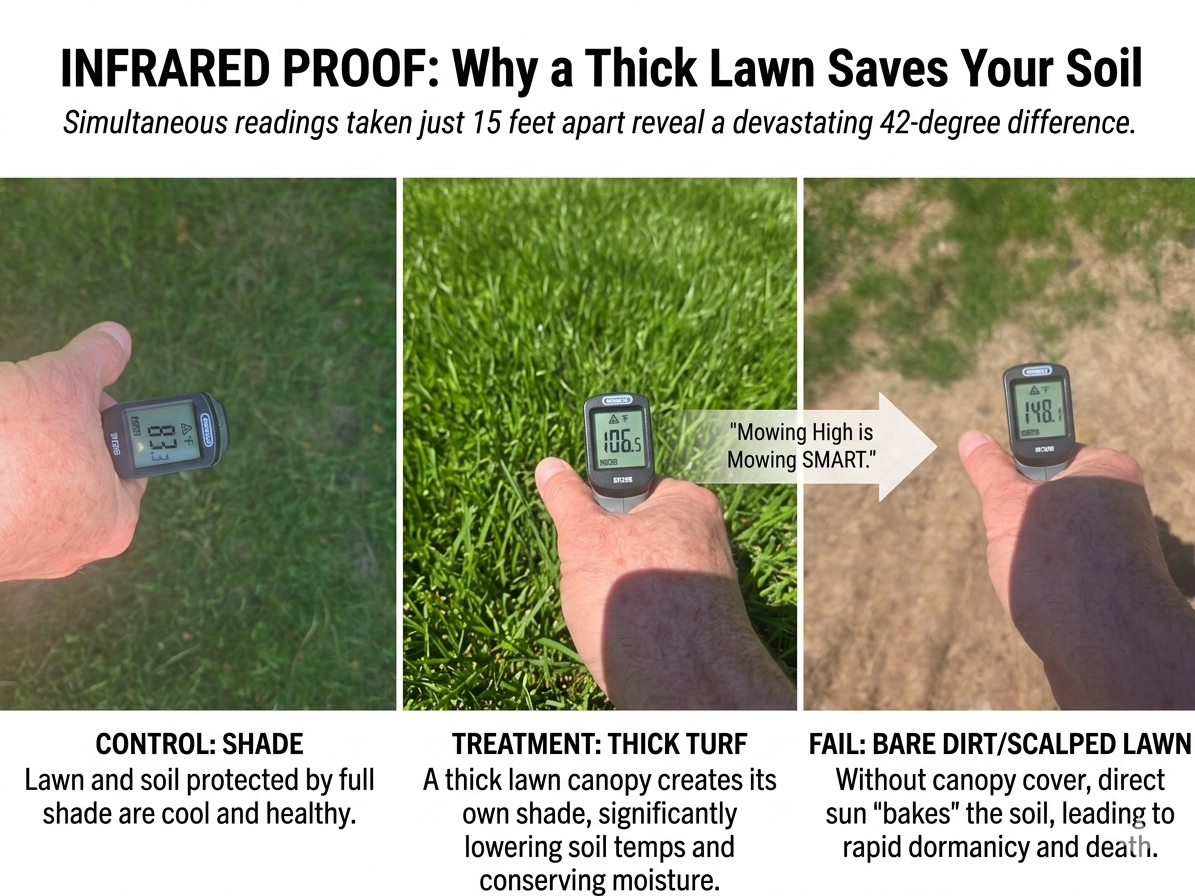
To see what our local Minnesota grass is actually up against, we took an infrared thermometer out into the field today. We took three temperature readings, all just 15 feet apart, at the exact same time. The results are eye-opening and show exactly why some lawns are staying green while others are burning to a crisp.

The Hard Facts: Three Measurements, 15 Feet Apart

If your yard is thin, cut too short, or was recently scalped by a low mower blade, it doesn't just look stressed—it is literally cooking. Look at the massive difference a thick lawn makes at ground level:

1. The Shaded Lawn

  • The Reading: 83.3°F
  • What it means: When grass is completely protected by shade, the soil stays nice and cool—well within a safe, comfortable range for grass roots to stay healthy.

2. The Thick, Tall Lawn (Full Sun)

  • The Reading: 106.5°F
  • What it means: Even in intense, direct afternoon sunlight, a thick, tall lawn acts like a built-in umbrella. It creates its own shade, dropping the ground temperature significantly, holding onto moisture, and protecting the roots from the worst of the heat.

3. The Bare Dirt & Thin Lawn (Full Sun)

  • The Reading: 148.1°F
  • What it means: Read that number again: 148.1 degrees. Without a thick layer of grass to block the sun, the bare ground turns into a hot frying pan.

The image at the top of this post shows all three of these photos compared side-by-side. It proves how the exact same weather can create totally different temperatures on the very same property.

Why Our Local Grass Can't Take the Bake

Most lawns in the Minneapolis-St. Paul metro are made up of Kentucky Bluegrass, Perennial Ryegrass, and Fine Fescue. These are "cool-season" grasses, meaning they love mild spring and fall weather.

  • The Comfort Zone: These grass roots grow best when soil temperatures are between 50°F and 65°F.
  • The Shutdown Point: Once the ground hits 90°F, the grass stops growing entirely.
  • The 148°F Emergency: When bare dirt gets up to 148°F, the extreme heat literally bakes the top of the root system. To survive, the plant drops its roots to try and save its core. This causes the lawn to quickly turn brown, go dormant, and eventually die.

When you cut your lawn too short or let it thin out, you aren't just giving it a haircut—you are stripping away its only air conditioning system.

Your Two Best Defenses Right Now

You can't fix this problem by just dragging a sprinkler around for an hour on Saturday morning. You need a better strategy to handle this kind of heat.

1. Mow High at 4 Inches (No Exceptions)

Stop cutting your lawn short. When a summer heat wave hits the Twin Cities, raise your mower blade to about 4 inches. Tall blades of grass act like millions of tiny sunshades for the dirt below. This built-in shade is the only reason the thick grass in our test stayed 42 degrees cooler than the bare dirt right next to it. Taller grass equals cooler soil, deeper roots, and a lawn that holds onto water much longer.

2. Use Midday "Cool-Down" Watering (Short Bursts)

There is an old myth passed around Minnesota neighborhoods that watering your lawn while the sun is out will "burn" the grass blades because the water drops act like little magnifying glasses. This is completely false.

When ground temperatures are spiking into the triple digits, running your sprinklers for just a few short minutes in the middle of the day does wonders. It isn't meant to soak the roots—it’s meant to cool down the grass blades through evaporation. Think of it like a quick, refreshing mist on a hot day. It gives your lawn immediate relief and shields it from heat shock.

The Bottom Line

A thick lawn isn't just about looking good for the neighbors; it is a shield that protects your soil and root system. If your yard is thin, short, and baking in this weather, it needs help before the roots cook completely.

Raise those mower blades, give the lawn a quick midday cool-down rinse, and let your grass grow thick so it can fight back against the hot summer sun.

By 7065376901 May 20, 2026
What Soil Temps, Rain, and Cool Nights Mean for Your Lawn Right Now—and How We’re Protecting It.
By 7065376901 May 10, 2026
Start watering NOW!
By 7065376901 April 7, 2026
Wake Up Call: The Grubs are Already Here Spring is officially arriving in the Twin Cities, but as the frost leaves the ground, some unwelcome guests are waking up. We’ve recently confirmed active grub activity in the St. Louis Park area, and if you aren’t careful, these pests can wreck your lawn before the first mow. Why are they active now? Grubs spend the winter deep in the soil to stay below the frost line. As soil temperatures climb into the 50s, they migrate back up to the surface. These are the larvae of Japanese Beetles and June Bugs, and they are currently at their largest size. They are hungry, and their favorite meal is the tender root system of your waking grass. How to tell if you have a problem Since you can't see what's happening underground, look for these three "Red Flags" in your yard right now: The "Carpet" Test: If you see a brown patch, try to pull it up. If it lifts easily like a piece of loose carpet with no roots attached, grubs have likely already eaten the "anchor" system. Spongy Turf: Walking on a grub-infested lawn feels like walking on a sponge or a memory foam mattress. Unusual Bird or Animal Activity: If crows, skunks, or raccoons are suddenly "mining" your lawn, they aren't just looking for worms—they are hunting for a high-protein grub snack. The April Treatment Strategy In the lawn care world, timing is everything. Most "preventative" products bought at big-box stores won't work on these large, mature grubs active in April. Now (Curative): If you have an active infestation (more than 5–10 grubs per square foot), you need a curative treatment to stop the feeding immediately. Late Spring (Preventative): We typically follow up with a systemic preventative in May to ensure the next generation of eggs doesn't survive. Don’t Wait Until June By the time the beetles emerge in June, the damage to your root system is already done. If you’re in St. Louis Park or the surrounding metro and notice your lawn looking a little "loose" this week, give us a call. We’ll get an expert eye on it and make sure your turf has the root system it needs to handle the Minnesota summer.

Show More →