This is why your lawn struggles in the spring
7065376901 • March 31, 2026

March 31, 2026

Spring Prep for West Metro Lawns: Managing Clay Soil in Plymouth, Medina, Maple Grove, and Corcoran


If your lawn is in Plymouth, Medina, Maple Grove, or Corcoran, you’re likely dealing with heavy clay soil. Unlike sandy soil that drains quickly, clay holds onto moisture and can become as hard as concrete if it’s handled incorrectly in the spring.

Aggressive raking on wet clay can actually smear the soil surface, sealing it off from the air and nutrients your grass needs. In the video below, I show you a much faster and safer way to "wake up" your lawn using a leaf blower:


Why the Leaf Blower Method is Best for Clay Soil

  • Prevents Soil Compaction: Heavy foot traffic and metal rakes on damp clay can compress the soil, making it harder for roots to grow. Using a blower allows you to prep the lawn while staying off the grass as much as possible.
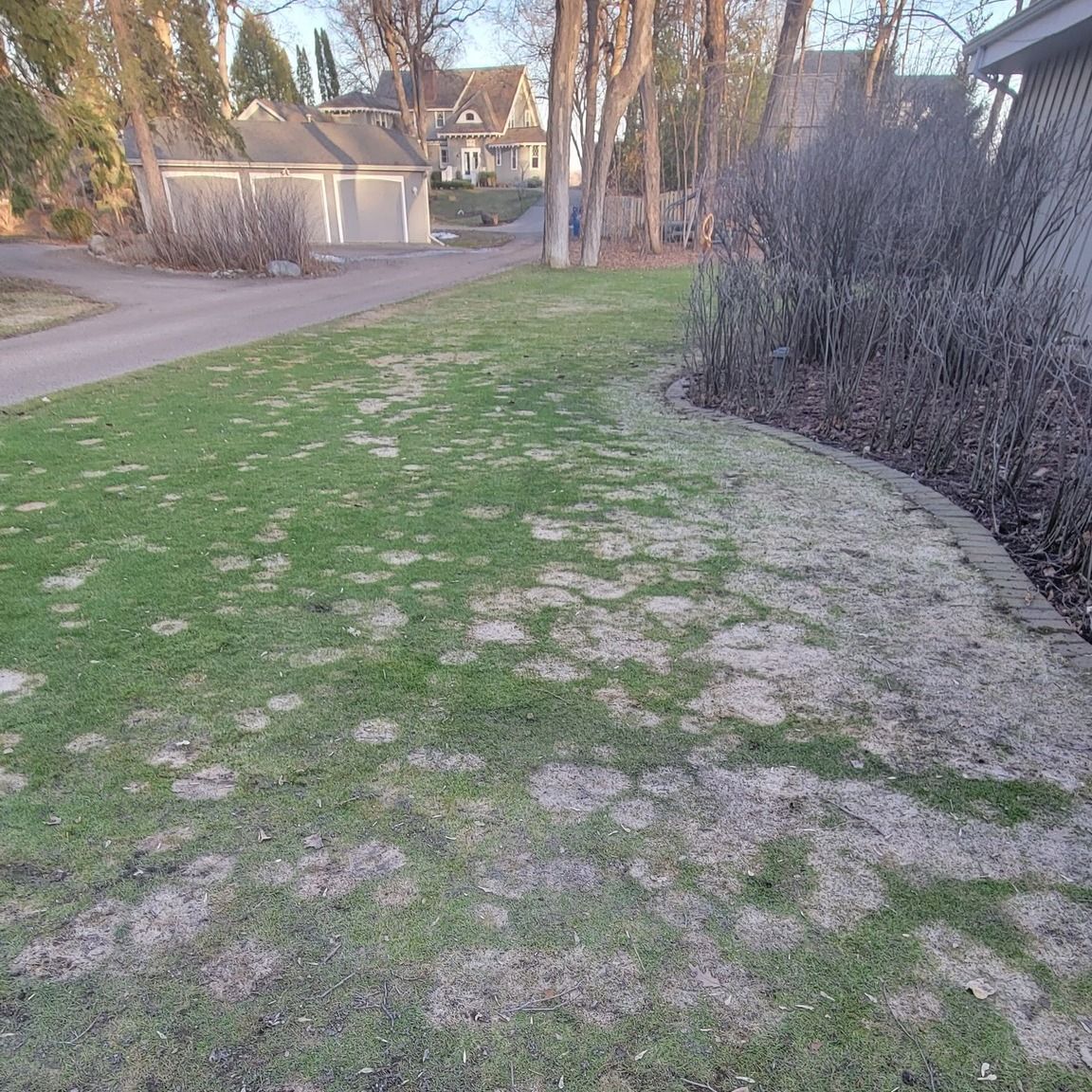
  • Fights Snow Mold Without the Mess: Clay stays wet much longer than sand. If you rake matted grass while it's still damp, you risk pulling up the entire plant. Blowing the grass stands it up so it can dry out and stop snow mold naturally.
  • Preps the "Hard Zones": Clay soil next to driveways and sidewalks in the West Metro can become incredibly compacted and hot. This method clears the debris so your spring applications can actually reach the soil rather than sitting on top of a mat of old grass.
  • Forty Years of Results: This channel is designed to help educate our customers and offer time-saving tips. People may disagree with what we say, and that's okay! These are techniques that have worked for us for over 40 years in the Twin Cities.

Pro-Tip for the West Metro

In areas like Maple Grove, Medina and Corcoran, timing is everything. Wait until the "squish" is gone from your lawn before you start this process. Once the surface is dry, use the blower to stand the grass up, and you'll see a much faster green-up without the back-breaking work of raking.

lawn fertilizing company
March 30, 2026
A lawn fertilizing company helps lawns stay green, healthy, and resilient with expert soil care, weed control, and lasting support.
By 7065376901 March 29, 2026
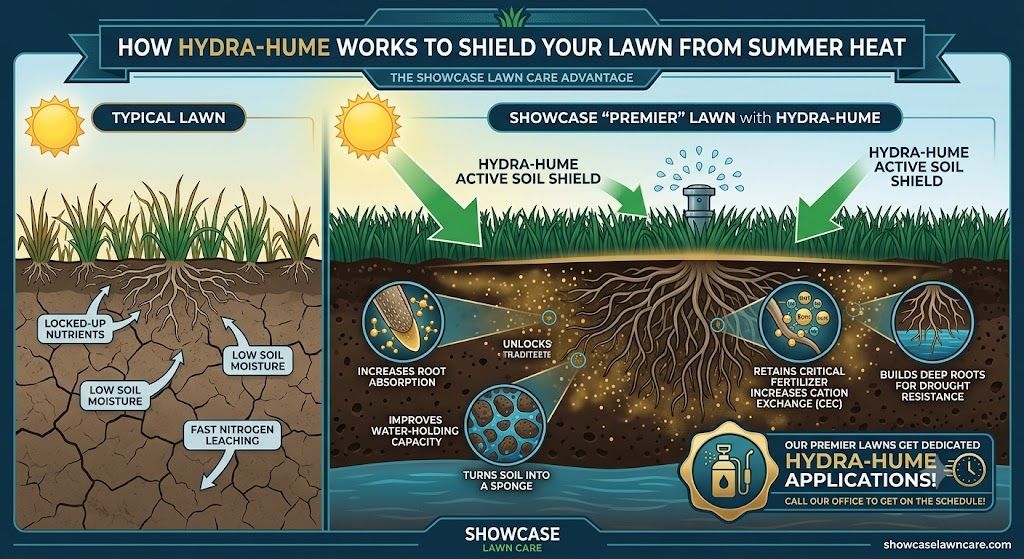
If you live in Andover, Coon Rapids, Ham Lake, Blaine, East Bethel, or Isanti , you aren't just growing grass in Minnesota—you’re growing it in the Anoka Sand Plain . While your neighbors in the West Metro deal with heavy clay, your lawn has a completely different DNA. At Showcase Lawn Care , we know that "standard" lawn advice—which often says to wait until early May —can actually lead to failure in sandy soil. To get a lush, green yard this year, you need to understand the unique physics of the sand and the "hidden" temperature traps that invite weeds. The Anoka Sand Plain Challenge: More Than Ju st Soil Sandy soil is a "sieve." It doesn't hold water, and more importantly, it doesn't hold nutrients. This leads to three major issues: Nutrient Leaching: Fertilizers can wash right past the root zone before the grass can eat. Rapid Dry-Out: Sand loses moisture at a record pace, leading to drought stress even in early spring. The Hunger Gap: Without the "buffer" of clay, sandy lawns can go from vibrant green to dormant brown in a matter of days. The "Pavement Effect": Why "Early May" is Too Late for Your Edges Most lawn companies and "Big Box" schedules suggest waiting until late May to start your spring applications. In clay-heavy areas like Plymouth or Maple Grove, that works. But in the Anoka Sand Plain, that wait is a trap. Sand heats up significantly faster than clay. Specifically, the soil next to your driveway, sidewalks, and street acts like a heat sink. These "hot zones" can be 5–10°F warmer than the rest of your yard. If you have a South or West exposure , that afternoon sun is baking your soil even harder. While the center of your lawn is still cold, the soil along your concrete or on your south-facing hill is already hitting the "Green Light" temperature for weed germination. If you wait until the calendar says "May," the weeds along your driveway have likely already started taking hold. Beyond Fertilizer: Rebuilding Your Soil Structure In the Anoka Sand Plain, we don't just "feed" the grass—we have to fix the soil. To turn a "sieve" into a "sponge," we recommend two critical treatments: Top Dressing with Organic Matter & Black Dirt: By adding a layer of high-quality organic matter and black dirt, you are physically changing the soil profile. This improves water retention and provides a stable home for beneficial microbes. Hydra-Hume (Humic Acid) Treatments: This is a game-changer for sandy yards. Hydra-Hume adds carbon and humic acid to the soil, which acts like a "magnet." It binds to nutrients and holds them in the root zone where the grass can actually reach them, rather than letting them leach into the groundwater. Your Best Defense: The "Living Umbrella" (Mowing Height) One of the easiest ways to fight the heat of the Anoka Sand Plain is often the most overlooked: Raise your mowing height. In sandy soil, we recommend keeping your grass at 3.5 to 4 inches . Why? Shading the Soil: Longer grass blades act as an "umbrella," shading the soil surface. This keeps soil temperatures lower and prevents weed seeds from getting the sunlight they need to germinate. Protecting South/West Exposures: On those hot South and West-facing areas, short grass allows the sun to bake the roots directly. Keeping it tall is the difference between a green lawn and a scorched one. Meet the "Sand Plain Villains" Sandy soil invites a specific cast of characters that thrive in heat and poor nutrients: Field Sandbur: The "ouch" weed. These thrive in dry, sandy gaps and produce those painful, spiny burs. Foxtail: Loves the baking summer sand. It requires a specific secondary barrier to prevent those bushy seed heads in July. Spurge & Oxalis: The "edge specialists." They love the heat radiating off your pavement and will form dense, mat-like carpets right where your grass meets the concrete. The Showcase Strategy: Precision Timing for Sandy Soil At Showcase Lawn Care , we don't do "one-size-fits-all." Our Anoka Sand Plain protocol includes: Split-Application Pre-Emergents: We hit the "hot zones" twice, once early to stop Spurge and Oxalis. Soil Building: We focus on Organic Matter and Hydra-Hume to stop nutrient leaching. Local Expertise: We live and work in the Andover/Blaine area. We know exactly when the sand is moving, so your lawn stays ahead of the curve. Stop Guessing. Start Growing. Is your lawn ready for the unique challenges of the Anoka Sand Plain? Don't let the "Pavement Effect" ruin your curb appeal this year.
lawn aeration
March 20, 2026
Discover answers to the most common questions that homeowners have about lawn aeration and learn how to create a lush, healthy, and thriving yard.
Show More →